Customer service quality assurance (QA) is the process of scoring support conversations against a defined standard and using the results to coach agents. It is how customer care quality is measured and improved. Manual review reaches a small sample, so modern programs use AI to score every conversation across chat, email and tickets.
In short
- Customer service QA scores conversations against your scorecard, then coaches agents from the results.
- Manual review usually reaches under 5% of conversations, so the score describes a sample, not the team.
- A working QA program has five parts: a scorecard, monitoring, calibration, coaching and reporting.
- AI scoring makes 100% coverage practical on chat, email and tickets, with humans kept for calibration and coaching.
What is customer service quality assurance?
Customer service quality assurance (QA) is the process of evaluating support conversations against a defined quality standard, then using the results to coach agents and improve service. It checks whether agents resolve issues, follow process, communicate clearly and deliver a consistent experience across chat, email, tickets and messaging.
In practice, a QA analyst or team lead scores a sample of conversations each week against a rubric, and those scores feed coaching, compliance and performance reviews. QA is how a support team keeps quality high as it grows.
The problem is that manual scoring only ever reaches a fraction of conversations. That gap is exactly what AI-powered QA and modern customer service QA software are built to close.
Customer service QA vs call center QA
Customer service QA and call center QA share the same method: define quality, score conversations, coach from the results. Call center QA grew up in voice, where reviewers listened to a sample of recorded calls. Customer service QA is broader and increasingly digital-first, covering chat, email, tickets and messaging as much as calls.
What differs is the channel mix. In a 2025 Gartner survey of 265 service leaders, self-service and live chat were on track to overtake phone and email as the most valuable service technologies within two years. A QA approach built only for voice leaves a growing share of the work unmeasured.
Many contact centers still review calls in one tool and chat in a spreadsheet. The better practice is one scorecard for every channel the team handles, so quality is judged against the same definition and the results are comparable. This guide takes the digital-first view. For the voice side, see our guide to call center QA.
How has customer service QA evolved?
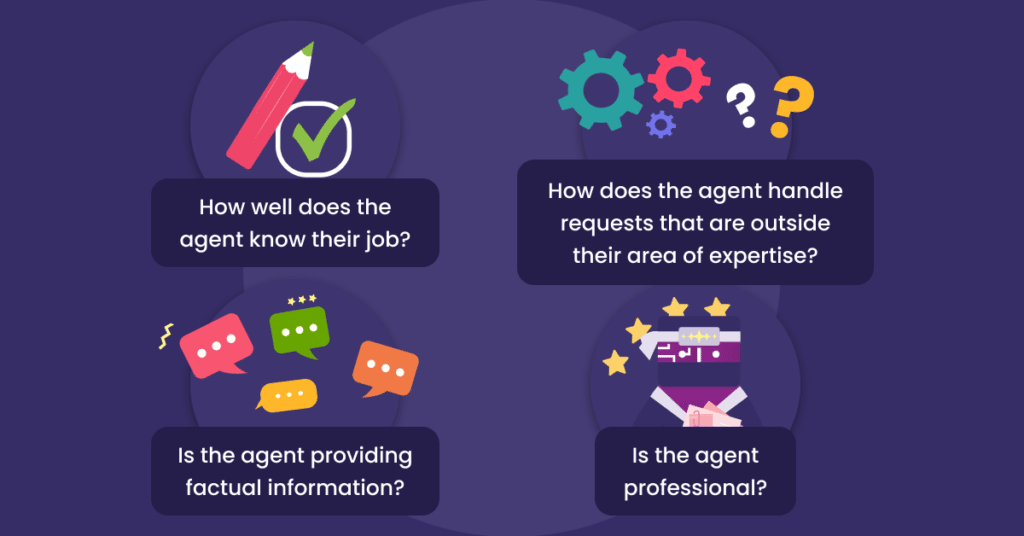
Customer service QA has moved through three eras: manual sampling in spreadsheets, QA software with digital scorecards and calibration, and AI-powered QA that scores every conversation. Each step made scoring more consistent, but only the third changed coverage, moving the score from a small sample to every conversation while humans move up to calibration and coaching.
- Era 1, manual sampling. Reviewers graded a few conversations per agent in spreadsheets. Tiny coverage, subjective scores.
- Era 2, QA software. Digital scorecards, calibration and dashboards made grading consistent and auditable, but a human still graded a small sample.
- Era 3, AI-powered QA. AI scores every conversation in scope, and humans move up to calibration and coaching. Coverage jumps from a sample to everything.
A fourth shift is here too: AI is starting to handle conversations directly. Gartner found that 85% of service leaders planned to explore or pilot customer-facing conversational GenAI in 2025. Those AI interactions need grading on the same standard, which makes complete coverage more important than ever.
Why does customer service quality assurance matter?
Customer service quality assurance matters because it is the only systematic way to know whether customers get the standard you promise. It catches poor interactions before they cause churn, keeps service consistent across agents and channels, feeds coaching, protects compliance and links service quality to CSAT and retention.
- Protects the customer experience by catching poor interactions before they cause churn.
- Drives consistency so every customer gets the same standard regardless of agent or channel.
- Powers coaching by turning real conversations into specific development for each agent.
- Ensures compliance where a missed step carries real risk.
- Links service to outcomes by connecting quality scores to CSAT and retention.
The stakes are not abstract. In a 2018 PwC survey, 32% of customers said they would stop doing business with a brand they loved after one bad experience.

Every one of these depends on coverage. When QA sees only 5% of conversations, the insight rests on an unrepresentative sample, and the senior time spent grading is time not spent coaching.
There is a hidden cost, too. The fully loaded cost of QA reviewers, plus the reporting time around them, adds up fast at scale, all to inspect a fraction of the work. Manual QA does not just limit visibility, it consumes exactly the people you most want coaching.
What does a customer service QA program include?
A complete customer service QA program has five parts: a scorecard that defines a good conversation, a monitoring method to evaluate conversations (manual, automated or both), calibration to keep scoring fair, coaching that turns scores into improvement, and reporting that ties quality to business outcomes.
Miss any one and the program stalls. A scorecard without coaching does not change behavior, and monitoring without calibration produces scores no one trusts.
What are the types of customer service QA?
There are four types of customer service QA: manual QA, where a reviewer grades a sample by hand; automated QA, where AI scores every conversation; peer and self review; and customer-driven QA based on CSAT and surveys. Most programs combine them, and the strongest use all four together.
- Manual QA: a reviewer grades a sample by hand. High context, very low coverage.
- Automated QA: AI scores every conversation against the scorecard. Full coverage and consistency.
- Peer and self review: agents review their own or colleagues’ conversations to build a shared quality culture.
- Customer-driven QA: CSAT, surveys and feedback bring the customer’s own view of quality into the picture.
Automated QA provides the coverage, human review adds calibration and nuance, and customer feedback validates it all against real experience.
How do you build a customer service QA program?
To build a customer service QA program, define what quality means for your team, turn it into a weighted scorecard, choose how conversations are monitored, calibrate reviewers and the AI, coach from the results and report on trends. The six steps below take a team from an unwritten standard to a working quality loop.
- Define quality for your team. Decide what great looks like across resolution, compliance, communication and efficiency. Involve agents and team leads so the definition reflects real work, not a manager’s assumption.
- Build a weighted scorecard. Translate that definition into criteria, weighted by what matters most, and set explicit auto-fail rules for compliance-critical steps.
- Choose a monitoring method. Manual alone caps you at a small sample, so most scaling teams automate the scoring and keep humans for calibration and nuance.
- Calibrate. Run calibration sessions so reviewers, and the AI, score the same conversation the same way, then reconcile the differences.
- Coach and close the loop. Route findings into per-agent coaching and track improvement at 30, 60 and 90 days so scores turn into behavior change.
- Report and refine. Watch quality trends, tie them to CSAT, and update the scorecard as products, policies and customer needs evolve.
For a longer walkthrough of each step, see how to build a QA program from scratch.

What goes on a customer service QA scorecard?
A customer service QA scorecard lists the criteria a good conversation must meet, grouped into weighted categories such as resolution, compliance, communication and efficiency, with auto-fail rules for compliance-critical steps. It is the heart of the program, because every score, calibration session and coaching conversation refers back to it. A typical weighting looks like this:
| Category | Example criteria | Weight |
|---|---|---|
| Resolution | Issue fully resolved, correct information | 35% |
| Compliance | Required steps and disclosures followed | 25% |
| Communication | Clear, empathetic, on-brand tone | 25% |
| Efficiency | Resolved without unnecessary back-and-forth | 15% |
A quick QA checklist for any conversation: Was the customer verified? Was the issue resolved? Was the information accurate? Was the tone empathetic? Were next steps clear? Was policy followed? For a deeper build, see our guide to the QA scorecard.
What is a good customer service QA score?
There is no universal pass mark for a customer service QA score, because it depends on how demanding your scorecard is. Most mature programs set a target band, often around 85 to 90% and up, and treat scores below it as a coaching trigger rather than a verdict on the agent.
Two things matter more than the headline number. The first is auto-fail criteria: a compliance breach should fail the whole conversation. The second is the trend per agent and team over time, especially whether it correlates with CSAT.
Calibration is what makes any score trustworthy. Without it, a “good score” is just one reviewer’s opinion.
What are customer service QA best practices?
The best customer service QA programs score for coverage rather than small samples, keep the scorecard focused, calibrate regularly, use QA to coach rather than police, tie quality to CSAT and apply one standard across teams, channels and BPO partners. Each practice protects either the accuracy of the score or agent trust in it.
- Score for coverage, not just samples. A 5% sample hides systemic problems.
- Keep the scorecard focused on what predicts customer outcomes.
- Calibrate regularly to keep scores fair and trusted.
- Make QA a coaching engine, not a policing tool.
- Tie quality to CSAT to prove the connection to customer outcomes.
- Standardize across teams, channels and BPOs with one shared standard.
How do you turn QA scores into coaching?
You turn QA scores into coaching by linking every finding to a specific behavior on the scorecard, giving each agent evidence from their own conversations and tracking whether scores move at 30, 60 and 90 days. A score that does not change behavior is wasted effort, because the point of measuring quality is to improve it.
The problem with manual QA is that preparing coaching eats the very time leads should spend coaching. Automated QA flips this. Because every conversation is scored, the system surfaces each agent’s specific strengths and gaps and generates coaching automatically, so the lead arrives with the evidence already gathered.
The best teams make coaching continuous and tie it to the behaviors the scorecard measures. See how AI coaching automates that loop.
Which metrics and KPIs measure customer service QA?
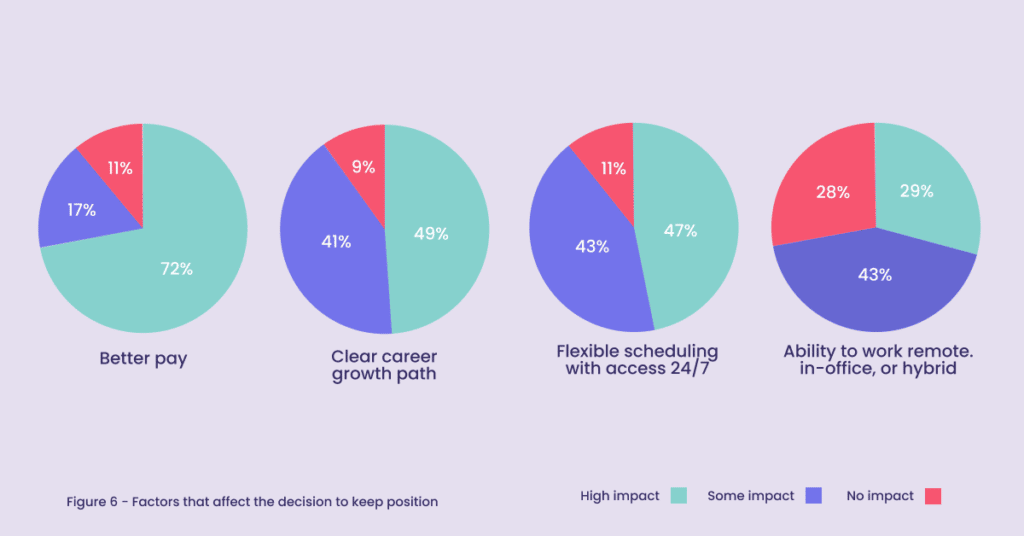
The core customer service QA metrics are the quality score trend, the correlation between QA scores and CSAT, first contact resolution and response times watched alongside quality, coaching impact per agent over time, and the scorecard automation rate. Together they show whether quality is improving and whether the improvement reaches customers.
- Quality (QA) score trend across the whole team, ideally on 100% of conversations.
- QA-to-CSAT correlation, proving scores reflect real experience.
- First contact resolution and response times, watched alongside quality.
- Coaching impact, score movement per agent over 30, 60 and 90 days.
- Scorecard automation rate, the share scored without human grading.
See our guide to customer service metrics and KPIs for the full set.
How does customer service QA improve CSAT and other core metrics?
Customer service QA improves core metrics by showing which behaviors drive them and focusing coaching there. Scoring every conversation reveals what raises CSAT, exposes resolution gaps a sample misses, speeds up agent ramp time and supports retention. Because scores tie back to CSAT, you can prove the link between quality work and customer outcomes rather than assert it.
- CSAT. Scoring every conversation reveals the behaviors that drive satisfaction, so coaching targets what raises the score.
- First contact resolution. Full coverage exposes resolution gaps a small sample misses.
- Agent ramp time. New agents are coached from real conversations immediately.
- Retention. Fair, development-focused QA raises agent engagement and lowers churn.
Sampling vs 100% coverage in customer service QA
Sampling means a reviewer grades a small, hand-picked share of conversations, typically under 5%. 100% coverage means automated QA scores every conversation in scope against the same scorecard. Sampling still has a job in calibration and disputes, but only full coverage describes the whole team and catches rare failures when they happen.
| Sampling (manual QA) | 100% coverage (automated QA) | |
|---|---|---|
| Share of conversations scored | Typically under 5% | Every conversation in scope |
| What the score describes | A few chosen conversations | The whole team |
| Rare failures (compliance, wrong answers) | Usually missed | Flagged when they happen |
| Consistency | Varies between reviewers | One standard, checked by calibration |
| Reviewer time | Hours of grading weekly | Redeployed to calibration and coaching |
| Coaching input | Prepared by hand | Generated per agent from all conversations |
| Where it still fits | Disputes, deep reviews, calibration sets | Day-to-day measurement |
A human read of a hand-picked set is how you calibrate the AI and settle disputes. It just cannot be the measurement itself. Automated QA removes the manual grading, not the human.
Can you trust AI to score customer service conversations?
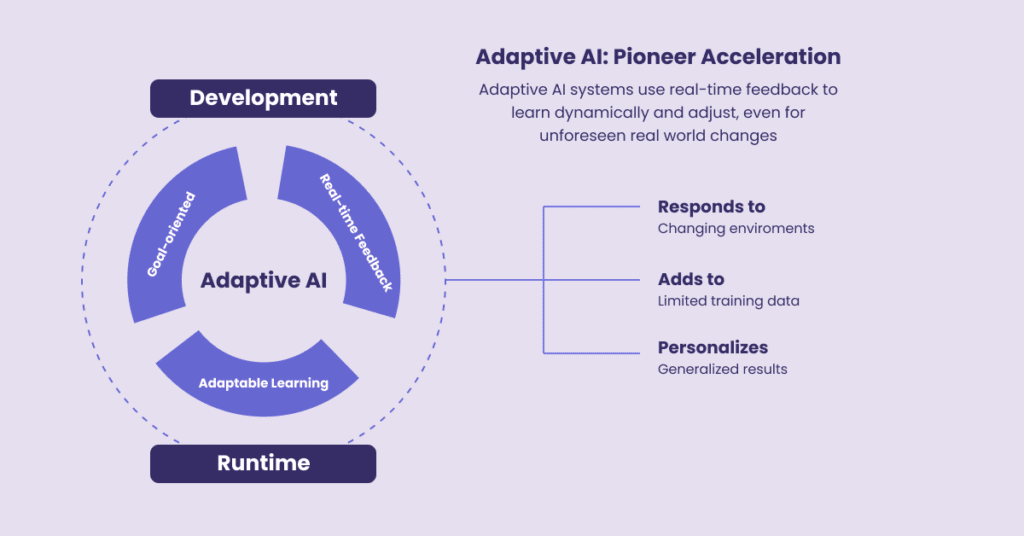
Yes, when human oversight is designed in. Support leaders trust automated QA when the AI is calibrated against their own reviewers, every reviewer override improves future scoring, QA scores are checked against CSAT, and the team controls how much is automated. Accuracy is earned through calibration and checking, not assumed.
- Calibration sessions to align the AI with your team’s standards, the highest-trust signal there is.
- Reviewer corrections at scale, so every human override improves future scoring.
- External validation, tying QA scores to CSAT so higher scores demonstrably track happier customers.
- A controllable automation dial, so you decide how much is automated and raise it as confidence grows.
For how to test this on your own data, read how accurate AI QA is.
What does modern customer service QA look like in practice?
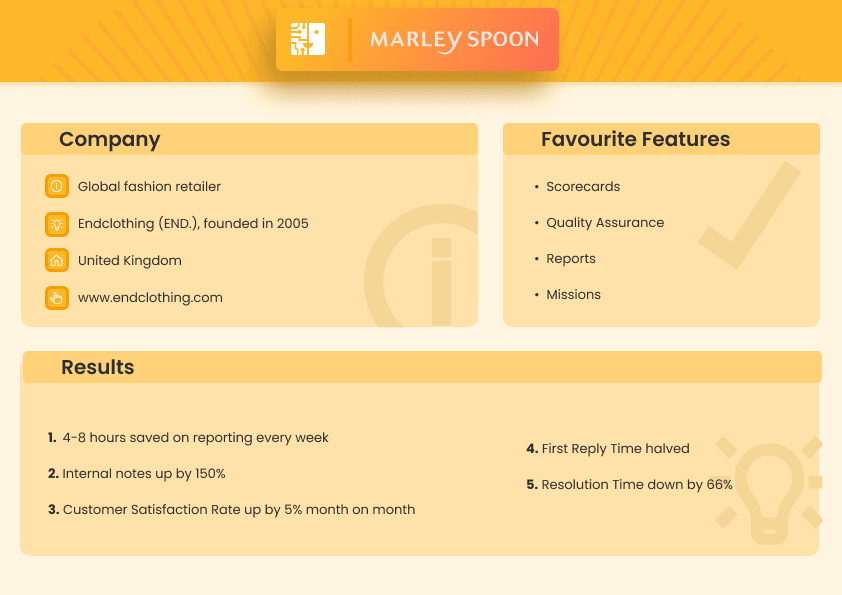
Modern customer service QA scores every conversation automatically and moves the QA team from grading to calibration and coaching. Two Kaizo customers show the shift: UiPath automated 100% of its QA, with 200% ROI and an 8% lift in quality score, and EverHelp cut coaching-preparation time by 75% across 16 support domains.
In both, coverage went from a sample to everything and senior time moved from inspection to improvement. The QA team did not disappear. It shifted to calibration and coaching, the higher-value work manual grading never left time for. Read how EverHelp moved quality control off spreadsheets.
See it on your own conversations. Kaizo scores 100% of your support conversations and turns the findings into coaching. Let’s talk.
How do you build the business case for customer service QA?
The business case for upgrading customer service QA has to convince three people: the Head of QA, who cares about coverage and fairness; the Head of Support or Operations, who cares about ROI and time; and team leads, who care about coaching. A pilot on one team makes the before-and-after measurable for all three.
- The Head of QA cares about coverage and fairness: from under 5% to 100%, and no reviewer bias.
- The Head of Support or Operations cares about ROI and time: reviewer hours reclaimed and how fast the investment pays back.
- Team leads care about coaching: less prep, more time developing agents.
Run the pilot, then extrapolate reclaimed hours and score gains across the operation.
What should you look for in customer service QA software?
Good customer service QA software scores every conversation against your own scorecard, explains each score so a reviewer can check it, supports calibration and human review, turns findings into coaching and connects to your helpdesk. Test coverage, scorecard flexibility and explained scores on your own conversations rather than taking them on trust.
- Coverage. Can it score every conversation unattended, or does the AI only assist a manual sample?
- Your scorecard, not a template. Custom criteria, weights and auto-fail rules, scoped per team, queue or client.
- Explained scores. Every score should come with a comment a reviewer can check against the conversation and overturn.
- Calibration and human review. Reviewers and the AI calibrated on the same conversations, with human review where it matters.
- Coaching built in. Findings turn into per-agent coaching with tracked impact.
- Integrations. Connects to your helpdesk (Zendesk, Salesforce and more) without a long build.
- Digital-first coverage of chat, email and messaging, not a voice product with chat bolted on.
See how Kaizo’s quality assurance platform handles scoring, calibration and human review, or compare vendors in our roundup of QA tools for support teams.
How does customer service QA differ by industry?
Customer service QA follows the same method in every industry, but the priority changes. SaaS teams protect quality while headcount scales, ecommerce teams protect CSAT through seasonal peaks, regulated teams need compliance coverage, BPOs need one standard across clients, and marketplaces need consistency across many interaction types.
- SaaS and tech support. Keep quality steady while headcount scales fast, and ramp new agents from real conversations.
- Ecommerce and retail. Protect CSAT through seasonal spikes when manual coverage collapses.
- Fintech and regulated support. Compliance coverage on 100% of conversations, not a sample.
- BPOs and outsourcers. Standardize quality across clients with unified evaluations and prove SLAs. See Kaizo for BPOs.
- Marketplaces and travel. Maintain consistency across high volume and many interaction types.
How does customer service QA work in a large, multi-site operation?
In a large operation, customer service QA has to hold one standard across sites, languages, BPO partners and AI agents. That means one core scorecard with scoped variations per team or client, calibration across sites rather than within them, and reporting that compares like with like, so a score in one region means the same as in another.
Three things change as an operation grows:
- More than one site or language. Reviewers in each site drift toward local norms. Run cross-site calibration on a shared set of conversations each month, and keep criteria wording identical in every language version of the scorecard.
- BPO partners. Each partner should be scored on your scorecard, not its own, so you can compare vendors and hold them to the SLA with evidence. Our guide to BPO quality assurance covers the contract side.
- AI agents. Conversations handled by an AI agent belong on the same scorecard as human ones. Kaizo scores the conversations Zendesk AI agents handle side by side with human ones.
Foot Locker Europe is an example of what that visibility does at scale. When volumes more than doubled in 2020, its European care team used Kaizo on top of Zendesk to see performance at management and agent level across several languages, and cut resolution time by 75% and reply time by 37% between 2020 and 2021, with CSAT up 13%.
How does customer service QA support compliance?
In regulated industries, customer service QA is about risk as much as experience. A missed identity verification, an omitted disclosure or incorrect regulated guidance can carry real financial and legal consequences, and a sample cannot see them: if you review 3% of conversations, you are blind to compliance on the other 97%.
Automated QA checks every conversation for the required steps and flags violations when they happen, turning compliance from a quarterly spot check into continuous assurance. See how this works for compliance and risk teams.
Regulators look for this. The UK FCA’s 2025 review of the Consumer Duty support outcome lists call listening, file reviews and speech analytics among the ways firms monitor support, and 13% of the firms it surveyed said they carried out no quality assurance on their support channels at all. In fintech, healthcare, insurance and other regulated support, the shift from sampling to full coverage is often the single strongest reason to automate.
What are the signs your customer service QA needs an upgrade?
Your customer service QA needs an upgrade when reviewers reach only a small, unrepresentative share of conversations, agents dispute scores as subjective, team leads spend hours grading by hand, or QA cannot keep pace with headcount. If three or more of the signs below are true, manual QA is already the bottleneck and it is time to automate.
- Reviewers reach only a small percentage of conversations, and the sample may not be representative.
- Agents push back on scores as subjective or inconsistent between reviewers.
- Team leads spend hours each week grading and preparing coaching by hand.
- You are scaling headcount and QA cannot keep pace without hiring reviewers.
- You run multiple teams, channels or BPO partners and struggle to apply one standard.
- Compliance rests on a sample, leaving most conversations unchecked.
When is automated customer service QA not the right fit?
Automated customer service QA is not the right first step for every team. If you handle a few dozen conversations a week, a lead can read them all and a spreadsheet scorecard is enough. If you have no agreed scorecard yet, write and calibrate one first, because automation only scales the standard you already have.
The same honesty applies to channels. If most of your volume is phone, check how any QA tool handles your phone volume before you buy, and do not assume a text-first product covers it.
How should QA cover AI agents and digital channels?
Customer service QA now has to cover two shifts: support going digital-first, and AI agents handling conversations directly. The answer is one scorecard for chat, email and messaging and for both human and AI conversations, scored side by side, so quality is comparable across the whole operation instead of split between tools.
For digital-first teams, that combination of full coverage and one standard is fast becoming the norm. For the AI side, see how to QA AI agents.
What are the most common customer service QA mistakes?
The most common customer service QA mistakes are treating a tiny sample as representative, overloading the scorecard, skipping calibration, scoring without coaching, using QA to punish rather than develop, and measuring one channel while the others go unchecked. Each one erodes either the accuracy of the score or the trust agents place in it.
- Grading a tiny sample and treating it as representative.
- An overloaded scorecard that dilutes the signal that matters.
- Skipping calibration, which erodes agent trust.
- Scoring without coaching, so nothing improves.
- Using QA to punish rather than develop.
- Ignoring digital channels and measuring only calls.
How does QA data feed Voice of the Customer?
QA data feeds Voice of the Customer because every scored conversation is also a signal about what customers struggle with, where processes break and which issues drive the most contacts. When you score every conversation rather than a sample, that signal becomes representative enough to act on in product, policy and retention decisions.
Gartner research from June 2024 found that among service leaders who rate their QA program highly valuable, 52% say that is mainly because of voice-of-the-customer insight, against 19% who point to rep performance.
With full coverage you can spot the top contact drivers, feed product and policy teams real evidence, and connect service quality to retention. QA, in other words, is becoming the front door to conversation intelligence.
The bottom line
Customer service quality assurance has outgrown the spreadsheet and the sample. The teams that win measure quality on 100% of conversations, keep humans focused on calibration and coaching, and tie every score back to the customer. Build the scorecard, automate the grading and coach from complete data, and QA becomes the engine that makes service consistently good.
To see that on your own conversations, explore Kaizo’s AI quality assurance for customer support or book a meeting.
Frequently asked questions
What is QA in customer service?
QA in customer service is the process of evaluating support conversations against a quality standard and using the results to coach agents and improve service. It applies to chat, email, tickets and calls. It is how a support team keeps quality consistent as it grows.
How do you measure customer service quality?
You measure customer service quality with a weighted QA scorecard applied to conversations. Then you track the quality score trend, its correlation with CSAT and the impact of coaching. Automation lets you measure 100% of conversations rather than a sample.
What are the 5 C’s of customer service?
The 5 C’s are commonly cited as communication, consistency, care, competence and commitment. A QA scorecard turns them into measurable criteria, so each one can be scored and coached.
Can customer service QA be automated?
Yes. Automated QA uses AI to score every conversation against your scorecard and generate coaching, moving coverage from under 5% to 100%. Humans stay in the loop for calibration and disputes.
Does automated QA replace QA analysts?
No. Automated QA removes the manual grading, so analysts spend their time on calibration, coaching and improvement. That is the work that raises quality.
How many conversations should you review per agent?
Manual programs typically manage three to five conversations per agent per week, which is under 5% of volume. Automated QA removes that limit by scoring 100%. The question then shifts from how many to sample to what to do with complete coverage.
What is the difference between QA and QC in customer service?
QA (quality assurance) is the ongoing process of evaluating and improving conversations. Quality control (QC) is more of a final check on output. In support, QA is the broader, continuous discipline that includes scoring, calibration and coaching.
How does QA connect to CSAT?
A good QA program correlates QA scores with CSAT. That shows whether higher-quality conversations produce more satisfied customers, and it focuses coaching on the behaviors that move both numbers.